Connect with us

In The Pages

Will Bank Native Stablecoin Infrastructure Crush Regional Remittance Companies?

Published

on

Facebooktwitterredditpinterestlinkedintumblrmail

The global remittance industry will be bracing for a shock that could reshape it for decades. With 21 major banks preparing to launch a unified stablecoin, the financial world is about to get a new settlement rail, one built by institutions that historically left cross-border money movement to smaller operators and fintechs. For the small and midsized remittance companies that have long served migrant workers and unbanked communities, this shift isn’t just another technological upgrade. It’s a direct challenge to the foundation of their business.

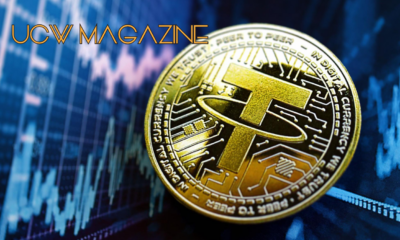
For years, these companies thrived because they operated where banks wouldn’t. They handled the messy parts of moving money across borders from navigating correspondent banking, managing pre-funded accounts, absorbing compliance burdens and maintaining agent networks capable of allowing their customers access to cash. Their margins came from inefficiencies such as slow settlement, opaque FX spreads and the lack of modern rails in many corridors. But once the consortium’s stablecoin goes live, those inefficiencies disappear almost overnight. This is different than Tether having USDT, this is the banks providing the infrastructure they never wanted to invest in, now that infrastructure is a part of the stablecoin evolution.

The most immediate fallout will be margin compression. A bank issued stablecoin allows institutions to settle transfers instantly and at extremely low cost. That alone undermines the fee structures remittance companies rely on. When banks can offer cross-border transfers at a fraction of today’s cost while still profiting from scale and reserve yield, smaller operators simply cannot compete. Their cost structure becomes heavier than the banks’ pricing structure and customers will naturally gravitate toward faster, cheaper, more trusted options.

This pushes remittance companies into a corner called the last mile, similar to Amazon where they use local delivery companies for that last mile. They no longer control the rails, they only control the distribution. Cash-in, cash-out, local agents and community relationships become their only defensible assets. These are important, but they don’t carry the same valuation weight as owning the infrastructure. Investors understand this. Infrastructure businesses command premium multiples because they control the flow of money. Distribution businesses do not. As remittance companies shift from infrastructure owners to service providers, their enterprise value will almost certainly decline rapidly.

Globally, the impact will vary by region, but the trend is clear. In digitally mature corridors, like US–Mexico or Gulf–India and Europe, banks and fintechs will quickly integrate the stablecoin into consumer apps, bypassing traditional remittance operators entirely. In cash heavy markets, smaller remitters may survive longer, but their role becomes transactional rather than strategic. Consolidation is likely. Mid-sized operators will merge to maintain scale, while smaller ones either pivot to niche community driven services or exit the market altogether.

The unbanked sit at the center of this transition, and the outcome for them is mixed. If banks and fintech partners build inclusive on-ramps such as low friction wallets, agent networks, flexible KYC, the stablecoin could lower costs and expand access. But if access requires full identification, smartphones, or bank accounts, millions will be left out. They’ll remain dependent on remitters whose margins are shrinking and whose long term viability is uncertain. In many regions, the unbanked may find themselves stuck between a modern rail they cannot use and a legacy rail that is slowly fading.

The launch of the 21 bank stablecoin consortium isn’t just a new product, it’s a reordering of the global money movement hierarchy. Small and mid-sized remittance companies will feel the pressure first and hardest. Their margins will thin, their competitive advantages will erode and their valuations will likely fall unless they reinvent themselves as indispensable last mile partners in a world where banks finally own the rails they once ignored.

Continue Reading
Advertisement

The Latest

In The Pages11 hours ago

Will Bank Native Stablecoin Infrastructure Crush Regional Remittance Companies?

The global remittance industry will be bracing for a shock that could reshape it for decades. With 21 major banks...

In The Pages4 months ago

Artificial Intelligence and Quantum Computing, Are We Safe?

AI is accelerating so quickly that most people are still staring at the convenience while missing the real story: security...

In The Pages4 months ago

The Stablecoin and Tokenization Reckoning

For years, the financial world treated stablecoins as a quirky crypto side‑show — a digital convenience for traders who didn’t...

In The Pages8 months ago

Is Reality TV Running Out of Reality?

Reality television used to feel exciting and new. Shows like Survivor and American Idol made viewers feel like they were...

In The Pages8 months ago

Crypto and Gen Z, How a Digital Generation Is Rewriting the Rules of Money

If you want to understand where money is headed, don’t look at Wall Street, look at Gen Z. Born into...

In The Pages8 months ago

AI and the Music Industry, is it an Opportunity or Obstacle for the Next Generation of Artists?

Artificial intelligence is no longer a future concept in the music industry, it is already here and it is changing...

Featured Articles2 years ago

Amazon MGM Studios to Spearhead the 007 Evolution and Why Idris Elba Is the Bond We Deserve

In a bold, game-changing move that promises to redefine one of cinema’s most cherished legacies, Amazon MGM Studios, alongside Michael...

Featured Articles2 years ago

Rewriting History? Hungary, Ukraine, and a Radical Reimagining of Borders

In an era of relentless geopolitical change, one provocative question continues to simmer beneath the surface of European political history:...

Featured Articles2 years ago

Pecu Novus vs. Solana vs. Ethereum: Tokenomics, Utility, and Growth Prospects

In the rapidly evolving world of blockchain technology, tokenomics plays a pivotal role in shaping the long-term value and utility...

In The Pages2 years ago

Why Billionaires Are Betting Big on Cricket’s Global Expansion

Cricket, one of the world’s oldest and most popular sports, is rapidly emerging as a prime investment opportunity for billionaires...

Featured Articles2 years ago

How Pecu Novus is Making Blockchain Seamless for Mass Adoption

For years, the road to mainstream Web3 adoption has been described as a gauntlet of technical obstacles, regulatory hurdles, and...

Featured Articles2 years ago

From the Stage to the Soul: The Journey of Astra Kelly

Some artists choose music, while for others, music chooses them. For Astra Kelly, the path was clear from childhood. At...

Featured Articles2 years ago

Against the Flames, Heroes in the Fight Against the Los Angeles Wildfires

The skies over Los Angeles glow a fierce orange, a stark reminder of the wildfires that have engulfed the region....

Featured Articles2 years ago

An Unstoppable Spirit: The Journey of Linda Josefsson, The Lady Viking

When I think about Linda Josefsson, the first thing that comes to mind is resilience, a quiet, steadfast strength that’s...

Featured Articles2 years ago

The TikTok Ban and America’s Privacy Paradox, Why Are US Social Media Users Flocking to Another Chinese Platform?

TikTok is on the brink of being banned in the United States, marking a pivotal moment in the ongoing battle...

  • Will Bank Native Stablecoin Infrastructure Crush Regional Remittance Companies?

    The global remittance industry will be bracing for a shock that could reshape it for decades. With 21 major banks preparing to launch a unified stablecoin, the financial world is about to get a new settlement rail, one built by institutions that historically left cross-border money movement to smaller operators and fintechs. For the small […]
  • Stablecoins, BofA, Citi, Goldman Sachs, Societe Generale, Tether, Circle, Ethereum, Pecu Novus , Solana
    On this episode of Money Never Sleeps Radio with Louis Velazquez we are focused on the bank issued Stablecoin mania that is taking place with Bank of America, Citi, Goldman Sachs and others jumping into the deep end, with Societe Generale having to make some serious choices, the impact on Tether and Circle, the impact […]
  • Junks Bonds, Michael Milken, Blockchain, Digital Credit Note Tokens, Pecu Novus
    On this episode of Money Never Sleeps Radio with Louis Velazquez we are tackling Junks Bonds what they are and why there were created through the genius of Michael Milken, How blockchain and digital credit note tokens fit into the picture of the financial future and why the Pecu Novus blockchain was chosen to build […]
  • Tokenized Equities, bStocks, xStocks, Coinbase,Binance, Kraken, HootDex, Hyperliquid
    On this episode of Money Never Sleeps Radio with Louis Velazquez we tackle tokenized equities, what they are and what this means for traditional equity markets. We go into bStocks and xStocks as custodians of equities they tokenize, we also touch on the exchanges Coinbase,Binance, Kraken, HootDex and Hyperliquid The post Tokenized Equities, bStocks, xStocks, […]
  • The CLARITY Act, Crypto Markets, Private Credit Markets and Tokenization
    On this episode of Money Never Sleeps Radio with Louis Velazquez we put a focus on the The CLARITY Act as it stalls on the hill, how Crypto Markets are reacting to President Trumps + The CFTC & SEC’s words, the evolution of the Private Credit Markets and Tokenization The post The CLARITY Act, Crypto […]
  • World Liberty Financial and the Trump Family, Stablecoins, Justin Sun
    On this episode of Money Never Sleeps Radio with Louis Velazquez we tackle a controversial topic in World Liberty Financial and the Trump Family, their bank trust charter and Stablecoins as well as their battle with Justin Sun and why President Trump is being looked at as the bad guy in all of this The […]

Copyright © UCWE Media, All Rights Reserved