Featured Articles
Rewriting History? Hungary, Ukraine, and a Radical Reimagining of Borders

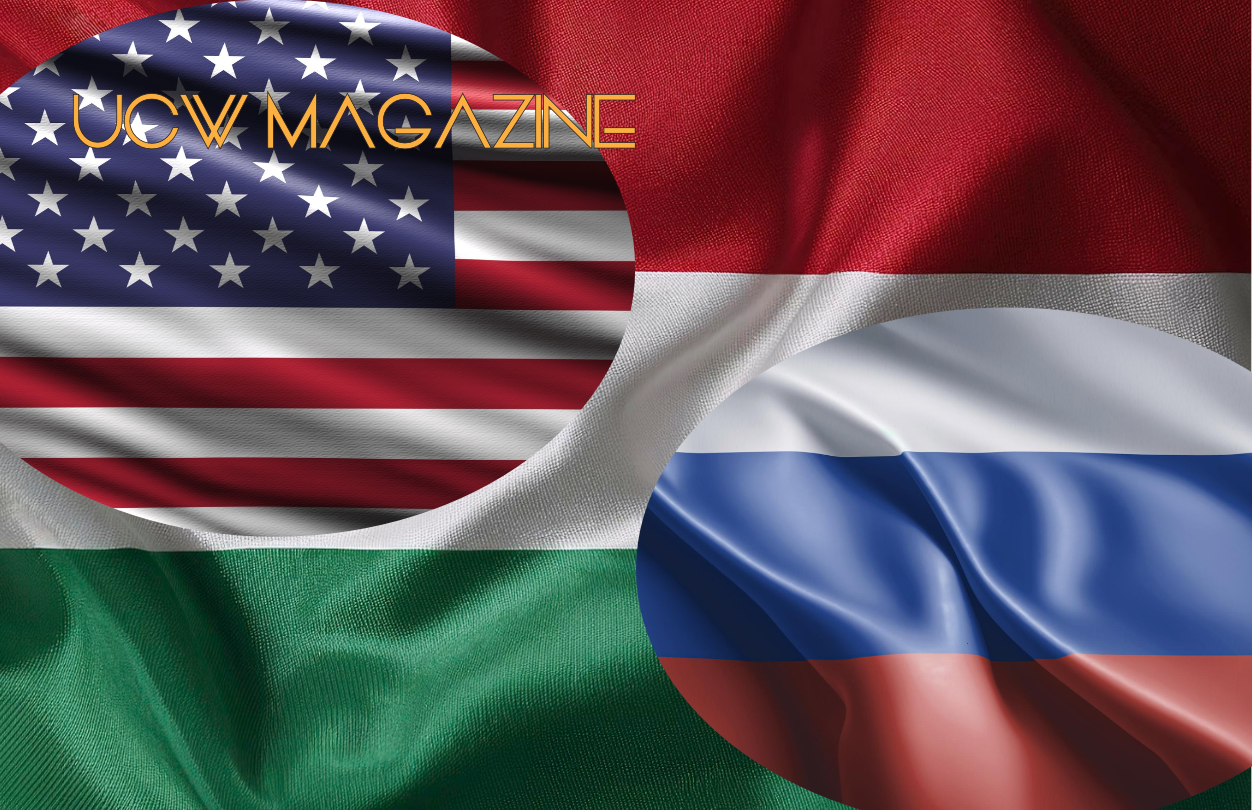

In an era of relentless geopolitical change, one provocative question continues to simmer beneath the surface of European political history: Could history be undone?
More specifically, could territories now in Ukraine ever be restored to Hungary, as some historical narratives suggest?
And what role might Russia and the United States play in such a dramatic reconfiguration of borders, a move that, in theory, might even help end conflicts and strengthen global alliances?
We are going to do a quick dive into what that might look like, since the Ukraine-Russia war is at the forefront, this seemed like an interesting topic to tackle, even in theory.
Hungary’s Historical Wounds
The modern Hungarian state bears the scars of a turbulent past. Following the Treaty of Trianon in 1920, Hungary was forced to relinquish nearly two-thirds of its territory, ceding lands that now form parts of Romania, Slovakia, Serbia, and critically for our discussion, modern-day Ukraine. In the case of Transcarpathia (or Zakarpattia), the region once flourished under Hungarian rule before shifting hands amid the upheavals of the 20th century. For many Hungarians, these losses remain a painful reminder of a once-greater nation, and the idea of “reclaiming” lost territories has periodically surfaced in political discourse.
Russia’s Role in a Contested Landscape
Any discussion about territorial shifts in Eastern Europe inevitably turns to Russia. After World War II, the Soviet Union, with Moscow at its helm, played a central role in redrawing the map of the region. Territories such as Transcarpathia were incorporated into the Ukrainian Soviet Socialist Republic, a move that, while part of broader Allied decisions to reshape postwar Eastern Europe, remains a point of contention for those who view it as an extension of external dominance over Hungary’s historical lands. Critics argue that Moscow’s involvement, indirectly or otherwise, contributed to Hungary’s territorial diminishment, a claim that fuels the “what if” scenario, could a reimagined order restore what was lost?
A Hypothetical Restoration: Bringing Ukraine Back into Hungary?
Enter the devil’s advocate scenario. Imagine a bold diplomatic breakthrough where, through unprecedented negotiations, parts of modern Ukraine—regions with deep historical ties to Hungary, could be reintegrated into Hungary. Proponents of such a radical idea point to history as evidence that borders are not immutable; after all, they have been redrawn countless times over the centuries. Yet, the practical hurdles are immense.
Today, Ukraine is a sovereign state with its own national identity and a population that, by international law and democratic principle, must have a say in its territorial integrity. The notion of reassigning territory based on historical claims collides with the modern doctrine of self-determination, a doctrine that has underpinned post-World War II international order and the current geopolitical framework in Europe.
The United States as a Diplomatic Arbiter
In this thought experiment, where could the United States come in?
As a global superpower and a key player in European security, Washington might be envisioned as a mediator capable of bridging the chasm between historical grievances and contemporary realities. The idea posits that if the U.S. were to champion a negotiated settlement—one that acknowledged historical injustices while respecting modern sovereignty—it could potentially defuse regional tensions. In this radical scenario, such a settlement might not only halt ongoing conflicts but also foster closer ties between Russia, the United States, and Europe by setting a precedent for cooperative conflict resolution.
However, this vision is not without its challenges. U.S. policy has long been anchored in the principles of national sovereignty and the inviolability of established borders. Any deviation from these norms risks destabilizing the delicate balance of power in Europe, a region still healing from the wounds of past conflicts and wary of any move that might set a dangerous precedent.
Who Would Be a Likely Leader
In this devil’s advocate scenario, Viktor Orban emerges as a uniquely positioned statesman capable of bridging the divides that currently plague Europe. As leader of a hypothetically larger Hungary, one that has reclaimed parts of its historical territory, Orban could harness his well-known nationalist appeal to forge a robust national identity while simultaneously extending a conciliatory hand to both Western and Eastern powers. His track record of pragmatic, if controversial, diplomacy might enable him to become an intermediary in a region long mired in discord. By recalibrating Hungary’s role on the continental stage, Orban could channel nationalist fervor into constructive dialogue, tempering extremist postures and paving the way for more stable, cooperative relations.
A larger Hungary under Orban’s leadership could serve as a stabilizing fulcrum between the United States and Russia, two global powers whose interests often clash in Eastern Europe. For the USA, a reenergized Hungary could represent a reliable partner that not only bolsters NATO’s eastern flank but also acts as a mediator, easing tensions with Russia through measured engagement. Conversely, Russia might view a strong, influential Hungary as a channel for dialogue—a state willing to acknowledge historical ties and foster communication between East and West. This dual role would create a rare diplomatic bridge, wherein Orban’s Hungary helps mitigate conflicts that have the potential to escalate into broader regional instability.
Moreover, Orban’s reputation for decisively protecting national interests could transform Hungary into a proactive architect of peace. In this hypothetical framework, his leadership might involve convening trilateral summits with key stakeholders from Europe, the USA, and Russia to negotiate mutual security guarantees and economic cooperation frameworks. Such initiatives could gradually diffuse the simmering tensions, thereby not only reducing the likelihood of conflict but also strengthening global ties through a shared commitment to stability and dialogue.
While this vision remains highly speculative and challenges conventional principles of national sovereignty and historical justice, it forces a reconsideration of what might be possible in an era of shifting geopolitical alliances. By recasting historical grievances as opportunities for dialogue rather than perpetual sources of strife, Orban’s larger Hungary could, in theory, foster a new equilibrium in Europe—one where the strategic interests of the USA and Russia converge on the common goal of lasting peace. In a world rife with entrenched positions and escalating hostilities, such a radical reimagining of power dynamics, though controversial, might offer a surprising antidote to future conflict.
A Utopian Vision or a Dystopian Reality?
While the idea of reuniting lost lands under Hungarian rule is intriguing as a thought experiment, it remains firmly in the realm of speculation. The historical facts are clear, borders in Eastern Europe have been the product of centuries of conquest, treaties, and wars. The modern international system is built on the recognition of existing states and their territorial integrity, a principle that has underpinned European peace for decades.
Yet, by playing devil’s advocate, we force ourselves to confront uncomfortable questions: What if history were malleable?
Could acknowledging and addressing historical grievances forge a new path toward reconciliation? And might a daring U.S.-brokered initiative, however implausible it seems, ultimately serve as a catalyst for deeper global cooperation among erstwhile adversaries?
In the end, the notion of bringing Ukraine “back into Hungary” is less a realistic policy proposal than a provocative exercise in reimagining history. It forces us to grapple with the enduring legacy of past conflicts, the complexity of national identities, and the intricate dance of international diplomacy. While such a radical reordering of borders is unlikely to ever materialize, the debate itself serves as a potent reminder, history is never truly settled, and the questions it raises continue to echo in the corridors of modern power.