Connect with us

In The Pages

From Denny’s to Dominance, Nvidia’s Journey to the Top of the Tech World

Published

on

Facebooktwitterredditpinterestlinkedintumblrmail

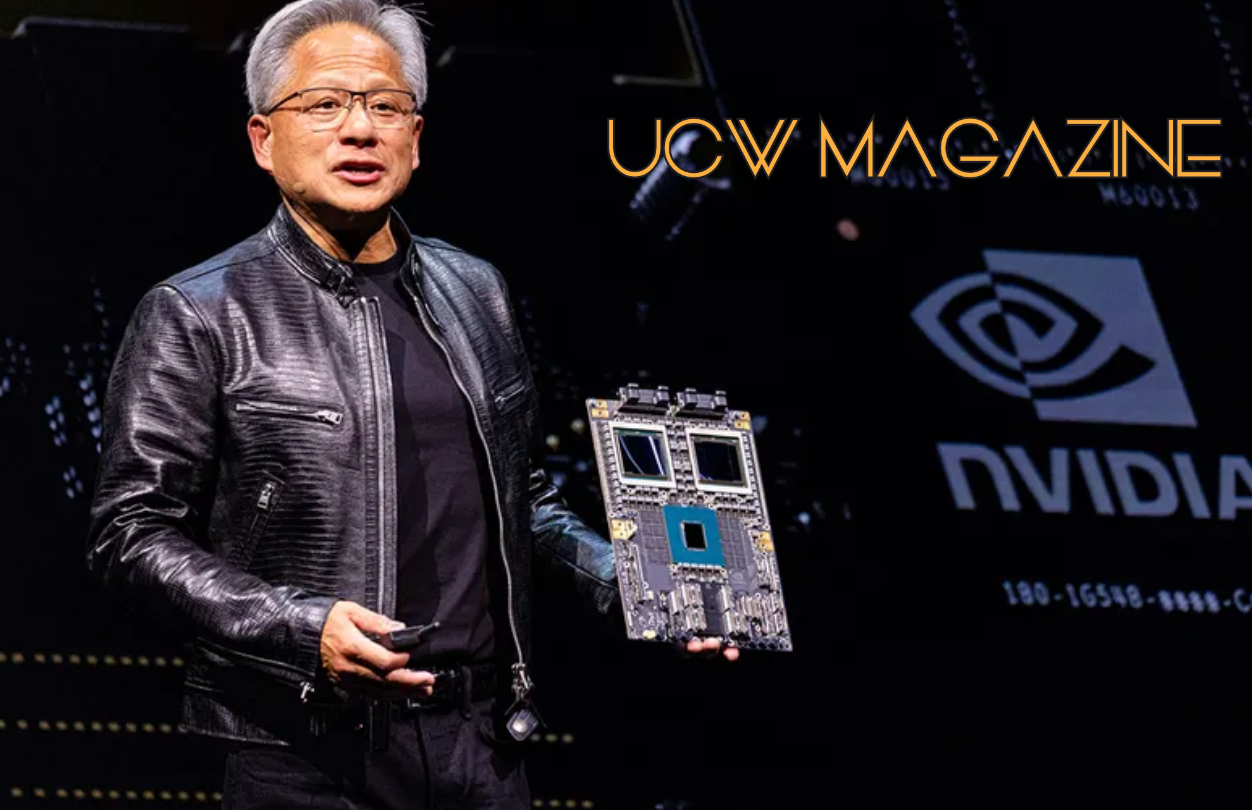
In 1993, three visionaries sat in a Denny’s restaurant in California, sketching out the future of computing on napkins. Little did Jensen Huang, Chris Malachowsky, and Curtis Priem know that their fledgling company, Nvidia, would become one of the most transformative forces in technology. Nvidia’s journey from its humble beginnings to its dominance in the AI chip market is a tale of grit, innovation, near collapse, and triumph.

Nvidia’s early years were anything but smooth. The company faced stiff competition in the graphics chip market, struggling to differentiate itself from more established players like ATI and 3dfx. At one point, Nvidia teetered on the brink of collapse, with financial resources dwindling and no blockbuster product to show for its efforts.

The turning point came with the launch of the GeForce 256 in 1999. Marketed as the world’s first GPU (Graphics Processing Unit), the GeForce 256 was revolutionary, introducing hardware-based transformations and lighting that redefined the video game experience. Nvidia not only found its footing but became the gold standard in gaming graphics, laying the foundation for the company’s rise to global prominence.

Changing the Game, Literally

With each successive generation of GPUs, Nvidia reshaped the gaming industry. The company’s innovations didn’t just make games look better—they fundamentally changed how they were created and played. Technologies like ray tracing, which mimics how light behaves in the real world, brought an unprecedented level of realism to gaming.

Nvidia didn’t stop at graphics. They expanded their reach into virtual reality (VR) and augmented reality (AR), making immersive gaming experiences possible. By consistently staying ahead of the curve, Nvidia became synonymous with cutting-edge gaming technology.

The AI Revolution

While gaming was Nvidia’s foundation, it was artificial intelligence that propelled the company to unimaginable heights. Under the visionary leadership of Jensen Huang, Nvidia foresaw the immense potential of GPUs for AI workloads. Unlike CPUs, GPUs excel at parallel processing, making them ideal for training and running machine learning models.

In 2012, Nvidia’s GPUs were instrumental in AlexNet, a deep learning model that sparked the AI boom. Since then, Nvidia has become the undisputed leader in AI hardware, with its chips powering everything from self-driving cars to advanced research in healthcare and climate science.

In 2023, Nvidia’s dominance in the AI chip market turned it into a trillion-dollar company, with its cutting-edge H100 and A100 chips becoming the backbone of generative AI models like ChatGPT and Bard.

$4 Trillion in Sight

Today, Nvidia stands as one of the most valuable companies in the world, with its market capitalization approaching $4 trillion and could easily hit that mark in 2025. The company’s continued investment in AI, gaming, and emerging technologies like the metaverse ensures that its growth trajectory remains steep.

However, challenges loom on the horizon. As Nvidia’s influence grows, so does scrutiny from regulators. Governments worldwide are keeping a close eye on its dominance in key markets, and potential antitrust actions could pose significant hurdles. But if history is any indication, Nvidia has proven time and again that it can adapt, innovate, and overcome.

Jensen Huang The Visionary Leader

At the heart of Nvidia’s success is Jensen Huang, the company’s charismatic CEO and co-founder. Known for his signature leather jacket and relentless drive, Huang has steered Nvidia with a clarity of purpose that few leaders can match. His ability to anticipate trends and pivot the company accordingly has been pivotal in its rise.

From a small team of dreamers in a Denny’s to a global powerhouse shaping the future of AI and gaming, Nvidia’s story is nothing short of extraordinary. With the sky as the limit and Huang at the helm, Nvidia’s best days are undoubtedly ahead.

Richard Wells
UCW Magazine

Continue Reading
Advertisement

The Latest

In The Pages6 days ago

Is Reality TV Running Out of Reality?

Reality television used to feel exciting and new. Shows like Survivor and American Idol made viewers feel like they were...

In The Pages6 days ago

Crypto and Gen Z, How a Digital Generation Is Rewriting the Rules of Money

If you want to understand where money is headed, don’t look at Wall Street, look at Gen Z. Born into...

In The Pages6 days ago

AI and the Music Industry, is it an Opportunity or Obstacle for the Next Generation of Artists?

Artificial intelligence is no longer a future concept in the music industry, it is already here and it is changing...

Featured Articles11 months ago

Amazon MGM Studios to Spearhead the 007 Evolution and Why Idris Elba Is the Bond We Deserve

In a bold, game-changing move that promises to redefine one of cinema’s most cherished legacies, Amazon MGM Studios, alongside Michael...
Featured Articles11 months ago

Rewriting History? Hungary, Ukraine, and a Radical Reimagining of Borders

In an era of relentless geopolitical change, one provocative question continues to simmer beneath the surface of European political history:...

Featured Articles12 months ago

Pecu Novus vs. Solana vs. Ethereum: Tokenomics, Utility, and Growth Prospects

In the rapidly evolving world of blockchain technology, tokenomics plays a pivotal role in shaping the long-term value and utility...

In The Pages12 months ago

Why Billionaires Are Betting Big on Cricket’s Global Expansion

Cricket, one of the world’s oldest and most popular sports, is rapidly emerging as a prime investment opportunity for billionaires...

Featured Articles12 months ago

How Pecu Novus is Making Blockchain Seamless for Mass Adoption

For years, the road to mainstream Web3 adoption has been described as a gauntlet of technical obstacles, regulatory hurdles, and...

Featured Articles12 months ago

From the Stage to the Soul: The Journey of Astra Kelly

Some artists choose music, while for others, music chooses them. For Astra Kelly, the path was clear from childhood. At...

Featured Articles1 year ago

Against the Flames, Heroes in the Fight Against the Los Angeles Wildfires

The skies over Los Angeles glow a fierce orange, a stark reminder of the wildfires that have engulfed the region....

Featured Articles1 year ago

An Unstoppable Spirit: The Journey of Linda Josefsson, The Lady Viking

When I think about Linda Josefsson, the first thing that comes to mind is resilience, a quiet, steadfast strength that’s...

Featured Articles1 year ago

The TikTok Ban and America’s Privacy Paradox, Why Are US Social Media Users Flocking to Another Chinese Platform?

TikTok is on the brink of being banned in the United States, marking a pivotal moment in the ongoing battle...

In The Pages1 year ago

The “Fake It Till You Make It” Mindset, a Double-Edged Sword in Business

In the world of entrepreneurship and innovation, the mantra “Fake it till you make it” has become both a rallying...

Featured Articles1 year ago

The Penguin Series on Max Sets a New Gold Standard for Comic Adaptations

Move over, Marvel, there’s a new ruler in the world of comic book adaptations, and it’s draped in the shadows...

Featured Articles1 year ago

The Psychology of Earned Respect and the Facade of Recognition

In the tapestry of human ambition, two distinct threads often emerge: those who build reputations through their actions and contributions...

  • Mining in the Age of Innovation, Why Technology, Not Just Commodity Prices, Is Redefining the Sector
    For much of modern financial history, mining has been viewed as a cyclical, capital-intensive industry whose fortunes rise and fall with commodity prices. Gold rallies during periods of fear, copper surges during economic expansions and silver and platinum oscillate between industrial and monetary narratives. Yet beneath the familiar boom-and-bust cycle, something more structural is taking […]
  • Registered Direct Offerings, A Double-Edged Tool for Public Companies and a Red Flag for Investors
    Registered Direct Offerings (RDOs) occupy an unusual place in the public markets. They are fully registered with the SEC, marketed as “clean” capital raises and often positioned by issuers as institutional-friendly alternatives to PIPEs or other structured financings. Yet for all their legitimacy, RDOs can carry consequences that materially reshape a company’s stock performance, shareholder […]
  • Private Equity’s New Frontier, From Classic Buyouts to Family Office Powerhouses and Crypto Integration
    For more than half a century, private equity (PE) has played a central role in reshaping corporate ownership and capital markets. What started as a relatively niche form of financing in the post-World War II era evolved dramatically in the late 1970s and early 1980s, when leveraged buyouts and institutional capital began to push private […]
  • Rio Tinto Lines Up Banks for Potential Glencore Acquisition
    In a significant development that signals a deeper wave of consolidation across the global mining industry, Rio Tinto plc has lined up a trio of high-profile financial advisers as it explores a potential acquisition of Glencore plc, according to multiple sources close to the matter. Such a transaction, if executed, would create the world’s largest […]
  • The Crypto Consolidation Phase, Why Ancillary Infrastructure Is Becoming the New Battleground
    By any historical measure, the digital asset industry has entered a new phase of maturity. After more than a decade of rapid experimentation, punctuated by cycles of excess, collapse, and reinvention, the crypto market is now exhibiting a classic hallmark of durable industries and that’s consolidation. This time, however, the focus is not merely on […]
  • Why Traditional Banks Are Quietly Becoming Fintech Firms and What That Means for the Future of Finance
    For more than a century, banks defined themselves by branches, balance sheets and regulatory moats. Today, that identity is rapidly changing. Across the United States, Europe and parts of Asia, traditional banks are steadily transforming into financial technology companies in everything but name. Core banking systems are being rebuilt in the cloud, APIs are replacing […]

Copyright © UCWE Media, All Rights Reserved